EndoTech NZ
EndoTechNZ
New Zealand
EndoTech Irrigation Concept

VortiFlow Irrigation Needle for Controlled Lateral Flow

Controlled lateral irrigant flow after shaping, built around a helical channel needle concept.

VortiFlow is positioned as an EndoTech irrigation concept that supports controlled irrigant exchange, debris transport, and a clearer transition from shaping to cleaning.

Click for further details
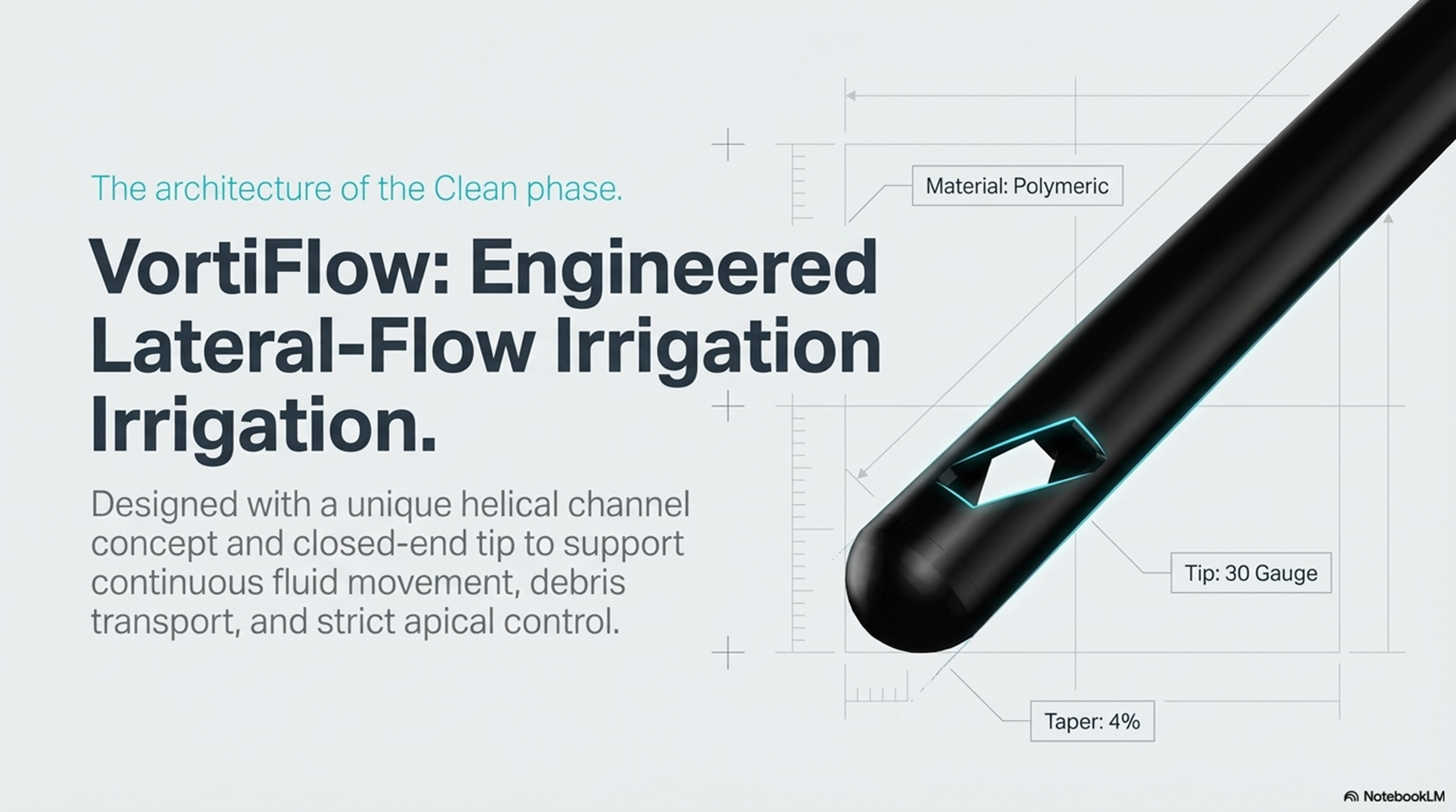
Technical CAD render of the VortiFlow irrigation needle
VortiFlow water-flow marketing image showing the irrigation concept with fluid movement

Facts Sheet

Review the VortiFlow facts sheet in-page

Open the full Engineered Endodontic Irrigation facts sheet in a scrollable viewer without leaving the product page.

Open download
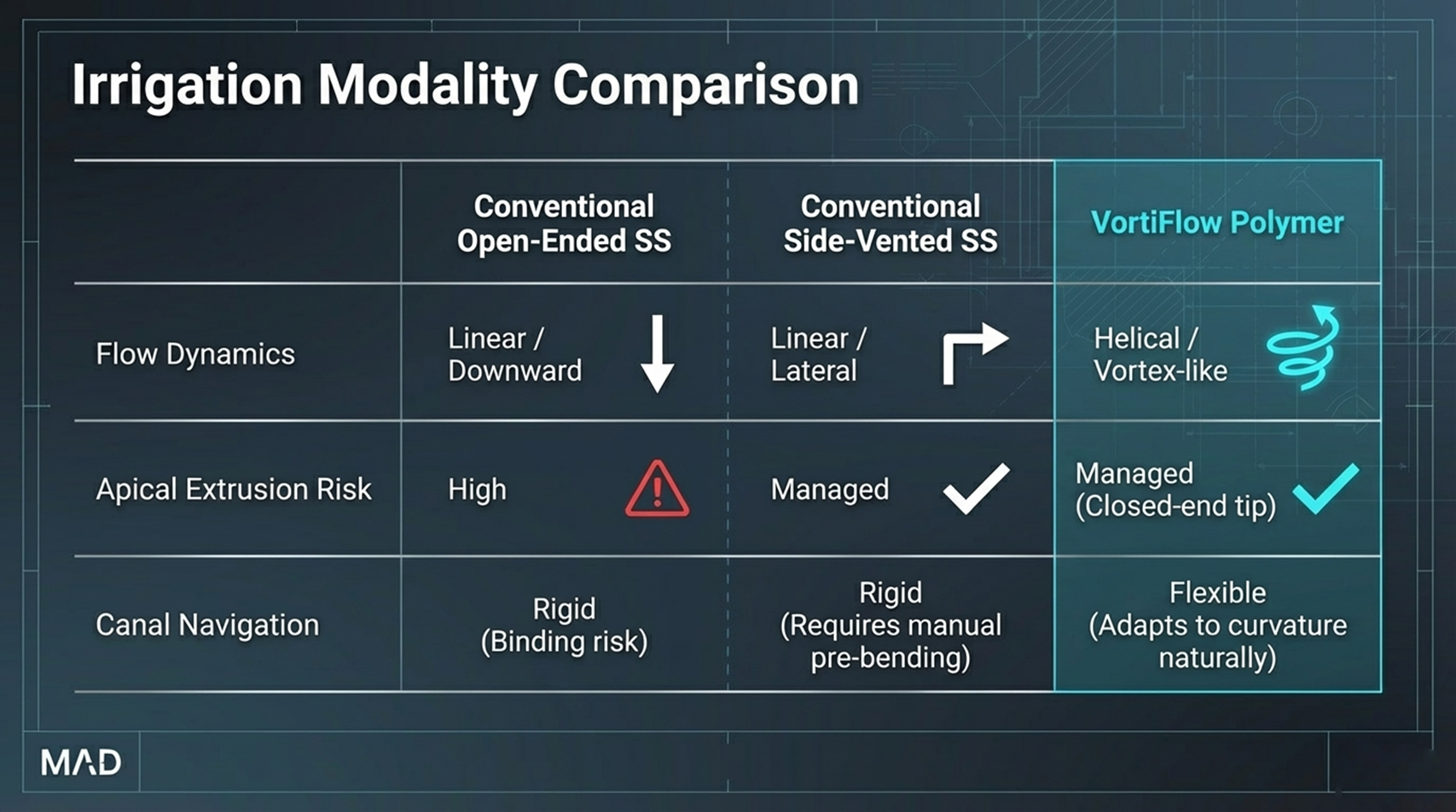
Irrigation modality comparison chart showing conventional open-ended stainless steel, conventional side-vented stainless steel, and VortiFlow polymer

Clinical Problem

Irrigation performance depends not only on solution choice, but also on delivery geometry, insertion depth, canal shape, and the way fluid is directed inside constrained anatomy.

TransformX Solution

After TransformX shaping has created the intended canal form, VortiFlow extends the EndoTech control story into irrigation through a helical-channel, lateral-flow delivery concept positioned between shaping and sealing.

How It Works

Helical channel flow design

VortiFlow is built around a lateral-flow concept in which irrigant exits through helical channels rather than being directed straight through an open apical outlet. The design is intended to create controlled flow movement within the canal space while reducing dependence on a direct apical jet.

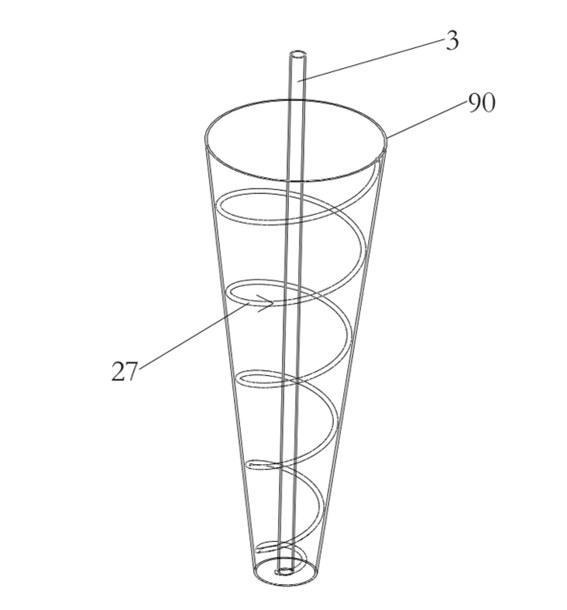
Diagram showing helical channel geometry for VortiFlow irrigation concept

Spiral channel geometry

The helical figure illustrates the wall-channel concept that underpins the lateral delivery story.

Engineering illustration of vortex-style flow path within an irrigation needle concept

Intended vortex-style movement

The engineering concept emphasises lateral movement and fluid exchange within the prepared canal space rather than a simple direct apical stream.

Mechanism Summary

Why irrigation delivery design matters

Published CFD and experimental studies indicate that irrigation behaviour changes with canal anatomy, working depth, vent geometry, and outlet design.

VortiFlow is positioned around the idea that a needle can be engineered to influence fluid movement more deliberately, with controlled lateral exit and less emphasis on direct apical jetting.

The concept should be understood as evidence-led engineering rationale within the irrigation step, not as a blanket claim of superiority over every activation method.

  • Helical channels on the needle wall support the lateral-flow concept.
  • Closed-end style geometry reduces reliance on a tip-open outlet.
  • The workflow intent is cleaner transition from shaping into active irrigation.

Key Features

Engineered around delivery geometry

VortiFlow is presented as an irrigation delivery concept where outlet design, tip form, and workflow placement are all clinically relevant.

Helical channel geometry

The concept is built around helical channels on the needle wall so irrigant delivery is directed laterally rather than relying on a direct apical outlet.

Closed-end style tip concept

The smooth distal form and lateral outlet geometry are intended to support controlled delivery while reducing emphasis on direct apical jetting.

System placement after shaping

VortiFlow is positioned as the cleaning step after TransformX shaping, helping the overall EndoTech workflow read as one connected treatment sequence.

Clinical Benefits

Why the delivery concept matters

The value story stays careful: more controlled delivery, cleaner workflow logic, and a stronger transition from shaping into irrigation.

Support fluid exchange

The VortiFlow concept is presented to support more controlled irrigant movement within the prepared canal rather than treating the needle as a commodity accessory.

Support debris transport

The lateral-flow concept is intended to help with irrigant replacement and debris transport in shaped canals, especially where geometry influences flow behaviour.

Keep cleaning inside the workflow story

It gives the EndoTech system a more explicit shaping-to-cleaning transition before sealing, linking instrumentation and irrigation more clearly.

Engineering Detail

Tip geometry and lateral outlet detail

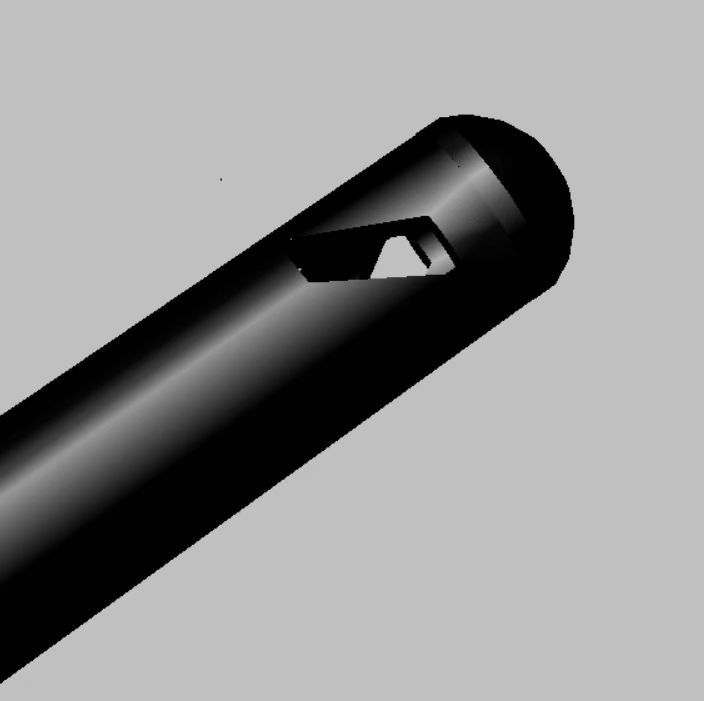
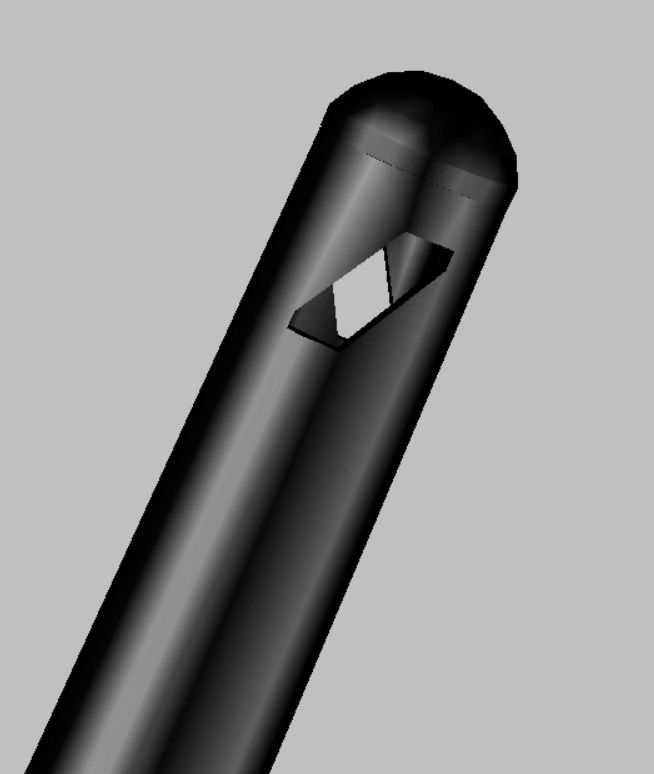
The CAD views support the core message: lateral outlet design, a smooth closed-end style tip concept, and channel-led flow direction.

CAD rendering of lateral outlet tip geometry for irrigation needle design
CAD rendering of closed-end lateral outlet irrigation needle tip concept

Key design callouts

Lateral outlet design

The concept prioritises side-directed irrigant delivery into the canal space rather than relying on an open apical exit.

Smooth closed-end style concept

The distal geometry is intended to support more controlled placement while reducing emphasis on direct apical jetting.

Channel-led flow direction

The helical-channel concept is presented to influence fluid exchange and debris transport inside the prepared canal.

Evidence & Rationale

Recent literature supports the broader principle that irrigation needle design affects fluid behaviour, insertion safety, and irrigant replacement. VortiFlow is presented here as an engineered irrigation delivery concept rather than a commodity accessory.

Needle design influences irrigation behavior

Published CFD and experimental work suggests that outlet geometry, venting pattern, and working depth can materially affect irrigant flow behaviour, wall shear, and safety considerations.

Design matters more in constrained canal shapes

Curved and minimally invasive canal preparations make irrigation more sensitive to anatomy, insertion depth, and directed flow behaviour.

Evidence-led, clinically grounded

VortiFlow is positioned as an engineered irrigation delivery concept within the EndoTech workflow, not as a substitute for every activation method.

From shaping to cleaning

The role of VortiFlow in the EndoTech system is to strengthen the transition from canal shaping into active irrigation before obturation.

Evidence Overview

Open the VortiFlow facts sheet if you want the supporting rationale collected in one file.

Workflow Placement

VortiFlow is positioned as the clean step after shaping and before BCS or iRoot sealing.

Step 1

Acrobat

Step 2

TransformX

Step 3

VortiFlow

Step 4

BCS / iRoot

VortiFlow FAQ

Is VortiFlow a replacement for activated irrigation?

No. VortiFlow is not presented here as a replacement for every activation method. It is positioned as an engineered needle-based irrigation delivery concept within a broader endodontic cleaning protocol.

How does this differ from a standard side-vented needle?

The VortiFlow concept is differentiated by the helical channel and lateral-flow design approach shown in the supplied engineering material, rather than by a conventional straight side-vent alone.

Where does VortiFlow sit in the EndoTech workflow?

VortiFlow is intended to sit after shaping and before obturation, linking the prepared canal form created by Acrobat and TransformX to the cleaning phase before BCS or iRoot sealing.

Is VortiFlow intended for minimally invasive shaping approaches?

The page positions VortiFlow as relevant to modern shaping approaches where canal anatomy, working depth, and flow behaviour all matter. It does not make a superiority claim for any specific preparation philosophy.

Distributor Support

See where VortiFlow fits before you evaluate the full workflow

Use VortiFlow as the cleaning bridge between canal shaping and final sealing. The page is built to explain the concept carefully, without overclaiming what the engineering rationale can support.