01
Establish a reproducible glide path first
Before introducing rotary shaping, confirm a smooth path to working length. This remains the most important control step before file progression.

Education
Concise technique principles for integrating Transform S™ into familiar workflows, with emphasis on glide path control, irrigation discipline, and careful apical advancement.
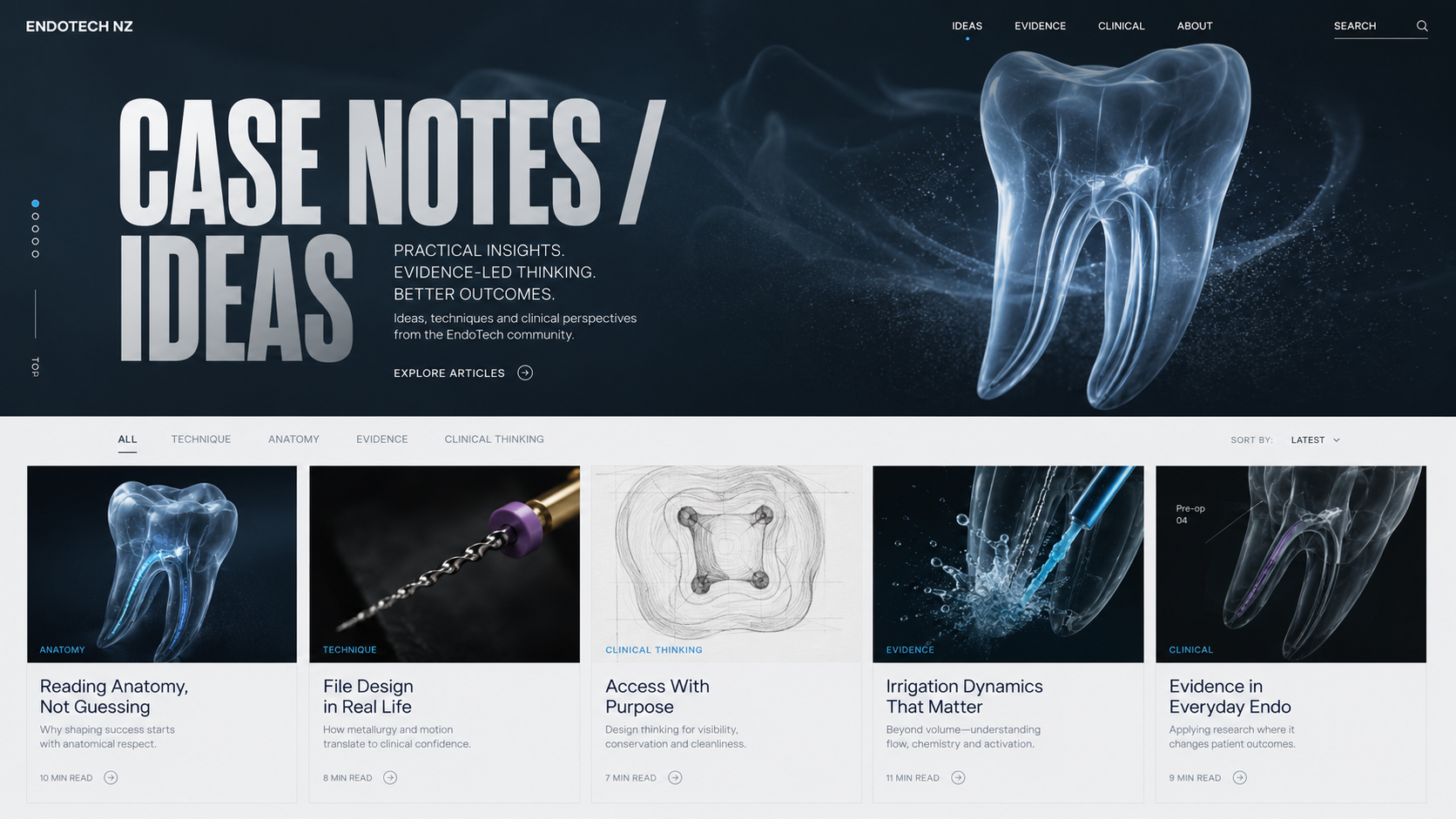
Blog
Open the EndoTech NZ blog
Case notes, clinical ideas, and evidence-led thinking.

NEW / CLINICAL ANATOMY
General Principles
01
Before introducing rotary shaping, confirm a smooth path to working length. This remains the most important control step before file progression.
02
Between files, flush debris, confirm patency with a small hand file, and irrigate again before moving to the next rotary instrument.
03
Transform S™ is designed for controlled advancement. Excessive apical pressure can reduce the benefit of the file geometry and increase procedural stress.
04
Watch for unwinding, visible distortion, or repeated use in difficult anatomy. Discard files when fatigue signs appear.
Between Each File
Keep the sequence simple and repeatable. The technique value comes from how consistently those control steps are maintained.
Avatar Tip
System-Specific Guidance
Next Step