
EndoTech NZ Engineered endodontics

Clinical protocol v1.0

Curved Canals: Glide-First Control

Curvature is not just a shape. It amplifies every decision: access, pre-curve, glide path, rotary pressure, irrigation, and the moment you decide to stop.

Anatomy map

Danger Map

Click me
Beware the 3 danger points

Click Stress Points to cycle through cleared-root examples where sharp curves, hooks, and wall contact bind, fatigue, and break files if the anatomy is not controlled.
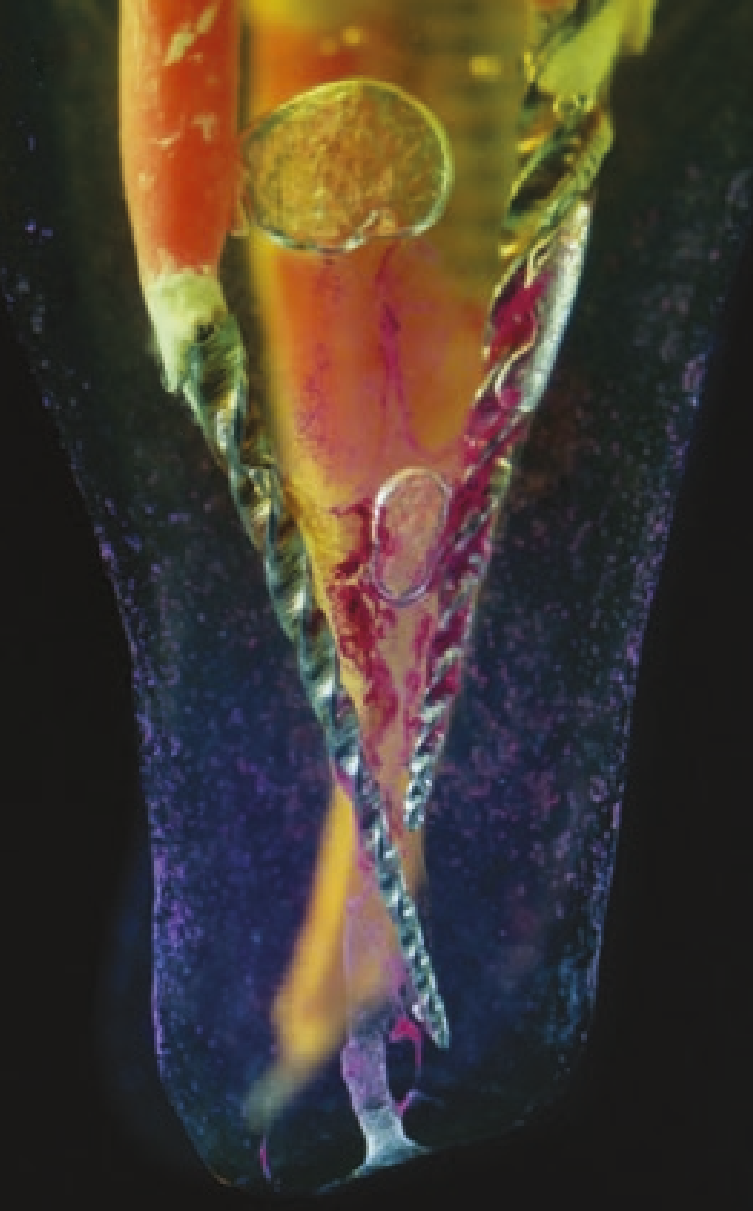
Cleared mesial root of a lower molar showing canal curvature and instrument position.
Mesial root stress point

A cleared lower molar root showing why curvature must be read before shaping pressure is added.

Clinical Warning in Complicated Anatomy

Do not ask a rotary file to discover the curve.

Curved canals punish load. If the path is incomplete, the file can straighten, engage the outer wall, block with debris, ledge, transport, or fatigue before the clinician has reliable control. Skilled use of handfiles can still be the endodontist's best friend.

MB2 sibling protocol

Curve Sequence

Glide path first
01

Read the curve

Study angled radiographs and use CBCT when anatomy, calcification, retreatment, or symptoms make the curve uncertain.

02

Scout passively

Use a small pre-curved #08 or #10 K-file to follow the canal path with tactile feedback before rotary shaping.

03

Confirm glide path

Pull back around 1 mm and confirm that the file slips back to length without forcing or handle manipulation.

04

Shape with control

Use short, light engagement with irrigation, recapitulation, and clean flutes so the file follows the prepared path.

Primary rule Follow do not force
Learn the magic Acrobat Glidepath tricks
Clinical problem

Curvature changes file behaviour before shaping begins.

A curved canal is a control problem. The file must be allowed to follow anatomy, not convert the canal into a straighter path under apical pressure.

Constraint Why it matters Controlled response
Straightening tendency A file under load wants to recover toward a straighter shape. Confirm the path before shaping and use light, repeatable progression.
Lateral wall stress Curvature concentrates cyclic fatigue and contact on the outer wall. Use short engagements, withdraw often, and clean flutes before re-entry.
Incomplete glide path The shaping file is forced to negotiate and cut at the same time. Scout, pre-curve, irrigate, and prove a reproducible pathway first.
Apical pressure The last millimetres are narrow, curved, and less forgiving. Protect working length with recapitulation and stop when feedback changes.
EndoTech solution

Build the flight path first. Shape inside it.

Acrobat creates the repeatable route. TransformX then shapes that route with Transform Technology and Avatar Tip guidance.

Acrobat tip

Feel the direction

The tip reads the curve with light feedback before anything is enlarged.

Acrobat flight path

Make the route repeatable

Acrobat turns that first line into a glide path the shaping file can re-enter.

Transform Technology

Adapt through the curve

The file response stays calmer where curvature creates stiffness and outer-wall load.

Avatar Tip

Stay guided apically

The shaping tip follows the prepared path instead of trying to make its own.

Chairside rule If the file stops following the path, stop shaping and rebuild the glide path.
Evidence and source anchors

Four ideas from the curved-canal source set that belong on the page.

The local research pack reviewed 15 curved-canal videos and transcripts. The page uses them as workflow anchors and redraws the clinical ideas as original diagrams.

Curvature reading

Canals often curve more than roots suggest

The planning principle is to read the pre-operative film and visualize the final prepared path before the first shaping file.

Glide Path & Shaping Strategies with Dr. Ruddle